

Best Things to Do in Cuyahoga Valley National Park: Waterfalls, Hiking, Scenic Railroad & Visitor Guide
Robert DeckerBetween Cleveland and Akron, one of America's most unusual national parks follows a crooked river through forests, wetlands, waterfalls, historic villages, old canal locks, and rolling Ohio farmland.
Cuyahoga Valley National Park doesn't have the enormous mountains of Yosemite or the desert expanses of the Southwest. What makes it remarkable is something entirely different: nearly 33,000 acres of protected landscape surrounded by one of the most populated regions in the Midwest.
Here you can watch a 60-foot waterfall tumble through a forested gorge, bicycle beside the historic Ohio & Erie Canal, ride a scenic railroad through the valley, look for beavers and great blue herons in a restored wetland, hike among massive sandstone ledges, paddle the Cuyahoga River, and still be back in Cleveland or Akron for dinner.
Hi, I'm Rob Decker. I've spent more than 50 years exploring and photographing America's national parks, and Cuyahoga Valley is a great example of why every park has its own personality. I've explored much of the valley, and what I especially like is how many different experiences can be packed into a relatively compact area — and how dramatically the park changes with the seasons.
Cuyahoga Valley National Park protects nearly 33,000 acres between Cleveland and Akron — yet there is no entrance fee. Waterfalls, more than 125 miles of hiking trails, the historic Towpath Trail, wildlife, and the scenic railroad make it one of the most accessible national park experiences in the country.
Cuyahoga Valley National Park at a Glance
- Location: Northeastern Ohio between Cleveland and Akron.
- Park Size: Approximately 33,000 acres extending roughly 20 miles along the Cuyahoga River valley.
- Entrance Fee: None. Cuyahoga Valley National Park does not charge an entrance fee.
- Don't Miss: Brandywine Falls, Towpath Trail, Beaver Marsh, The Ledges, Cuyahoga Valley Scenic Railroad, and Blue Hen Falls.
- Recommended Time: One full day for the highlights; two or three days if you want to hike, bike, or ride the train.
- Best Starting Point: Boston Mill Visitor Center in the heart of the park.
- Camping: There are currently no National Park Service campgrounds inside Cuyahoga Valley National Park.
Why Cuyahoga Valley Became a National Park
Cuyahoga Valley's location between two major metropolitan areas is not an accident. In fact, protecting open space close to where millions of people live was central to the park's creation.
Congress authorized Cuyahoga Valley National Recreation Area in 1974 as part of a broader effort to preserve landscapes and provide outdoor recreation near urban populations. It was officially designated the following year and became Cuyahoga Valley National Park in 2000.
Today, the park protects a fascinating mixture of natural and cultural resources: forests, wetlands, wildlife habitat, farms, historic buildings, small communities, the Cuyahoga River, the Ohio & Erie Canal, and the railway that followed it.
That history makes Cuyahoga Valley feel different from many western national parks. This isn't wilderness untouched by people. It is a landscape people have lived in, farmed, crossed, industrialized, damaged, protected, and restored over generations.
1. Start at Boston Mill Visitor Center
If this is your first trip to Cuyahoga Valley National Park, start at Boston Mill Visitor Center.
Located near the center of the park, the visitor center occupies a historic building that once served as a company store for the Cleveland-Akron Bag Company. Today, it's the best place to pick up maps, check current trail and road conditions, ask rangers for recommendations, and get oriented before exploring the valley.
It's also a convenient starting point for several nearby destinations, including the Towpath Trail, the Village of Boston, the scenic railroad, and hikes toward Blue Hen Falls and Brandywine Falls.
Travel Tip: Cuyahoga Valley has dozens of trailheads and access points rather than a single park entrance. Stop at Boston Mill Visitor Center or download your maps before you begin so you can organize your route efficiently.
2. Ride the Cuyahoga Valley Scenic Railroad
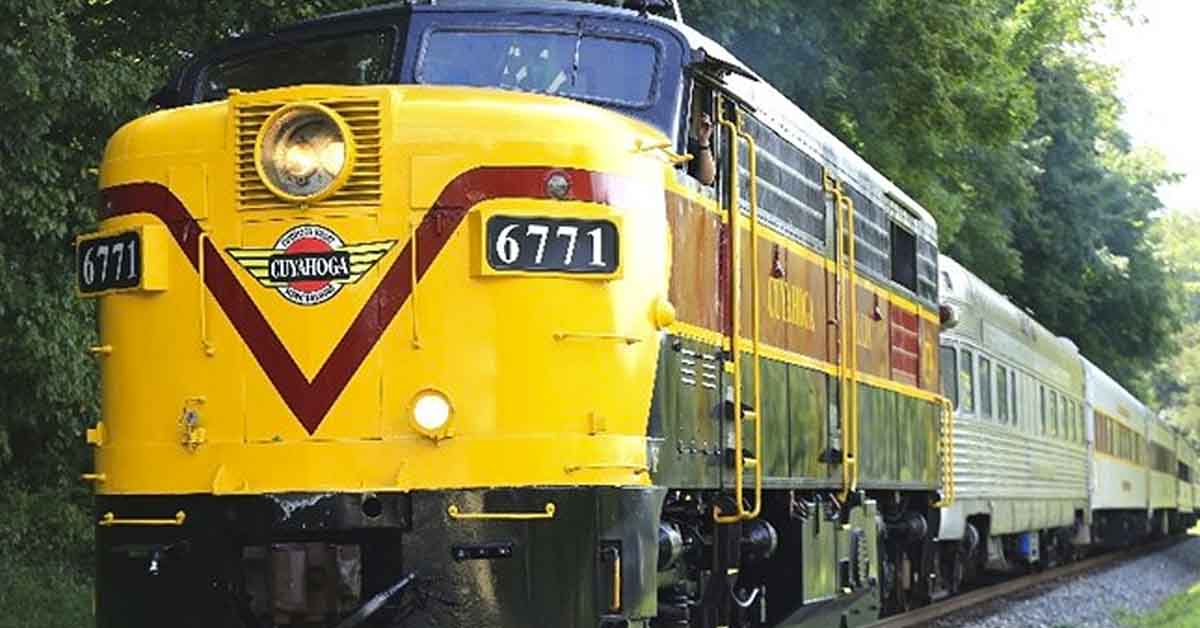
Few national parks can be explored by train, which makes the Cuyahoga Valley Scenic Railroad one of the park's signature experiences.
The railroad follows the valley alongside portions of the Cuyahoga River and Towpath Trail, passing through forests, wetlands, historic communities, and areas that are difficult to appreciate from a car.
Look out the windows for deer, bald eagles, herons, beavers, and other wildlife. The trip also provides a different perspective on the relationship between the river, canal, railroad, and communities that developed along this natural transportation corridor.
The railroad operates seasonal National Park Scenic excursions as well as special programs and events. Schedules, stations, seating options, and departure times vary during the year, so check the current Cuyahoga Valley Scenic Railroad schedule before planning your day.
Use the Explorer Program for a One-Way Adventure
One of my favorite ways to combine the train with the rest of the park is the railroad's Explorer Program, formerly known as Bike Aboard.
Seasonally, cyclists, hikers, runners, and paddlers can travel through part of the valley under their own power and then use the train for a one-way return. That makes it possible to cover more ground without retracing your entire route.
The program has its own schedule, fares, and participating stops, so plan the train portion before beginning your ride or hike rather than assuming every train or station can accommodate you.
3. Walk or Bike the Ohio & Erie Canal Towpath Trail
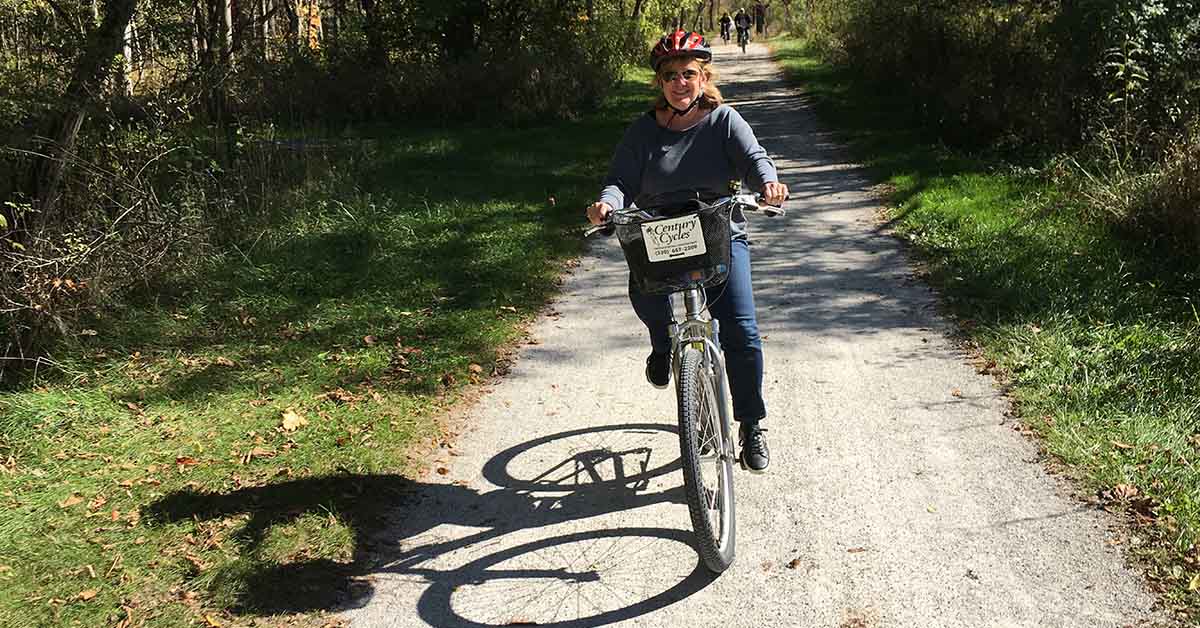
The Towpath Trail is the spine of Cuyahoga Valley National Park.
About 20 miles of the trail run through the national park, following the historic route of the Ohio & Erie Canal. In the nineteenth century, mules walked along this same corridor towing canal boats loaded with people and goods.
The canal helped connect the Ohio River with Lake Erie and transformed Ohio's economy by making it far easier to move farm products, raw materials, manufactured goods, and travelers across the state.
Today, the old towpath has become one of the best recreational trails in the region.
Its generally level, hard-packed surface makes it ideal for walking, running, bicycling, and family outings. Along the way, you pass canal locks, historic structures, wetlands, the Cuyahoga River, and several of the park's most popular destinations.
Why the Towpath Trail Is Worth Exploring
- History: Follow the actual corridor used by the Ohio & Erie Canal.
- Accessibility: Much of the trail is level and suitable for bicycles, strollers, and many mobility devices.
- Wildlife: Wetlands and river habitat provide excellent opportunities for bird and wildlife viewing.
- Connections: The trail links numerous park destinations and railroad stations.
- Distance: Choose anything from a short stroll to a full-day ride.
4. See Brandywine Falls
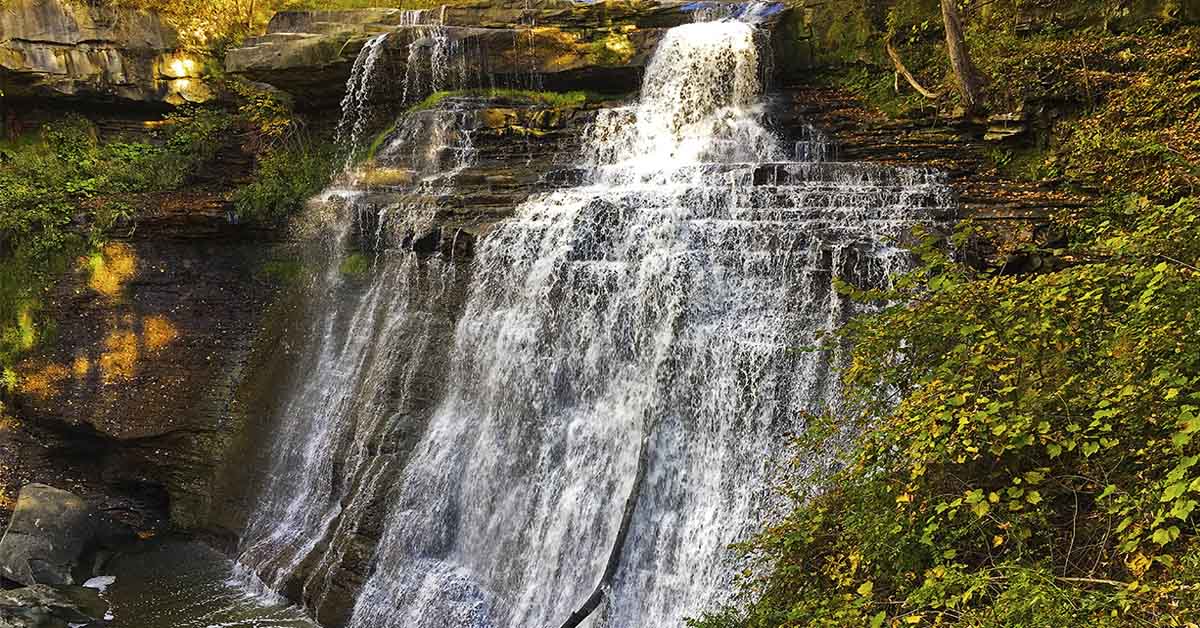
Brandywine Falls is the best-known natural landmark in Cuyahoga Valley National Park — and for good reason.
Brandywine Creek drops 60 feet over layers of Berea Sandstone and softer shale, creating a broad cascade that changes personality throughout the year. Spring rains can turn it into a powerful rush of water, summer brings a greener setting, autumn frames the gorge in brilliant foliage, and winter can transform portions of the falls into dramatic formations of ice.
A boardwalk leads to upper and lower viewing areas, with the upper section providing accessible views of the waterfall. Visitors wanting a longer experience can continue onto the roughly 1.5-mile Brandywine Gorge Loop.
Brandywine is one of the busiest locations in the park, and the parking lot often fills during good weather. Arrive early in the morning or later in the afternoon, particularly on weekends and during fall color season.
5. Watch Wildlife at Beaver Marsh
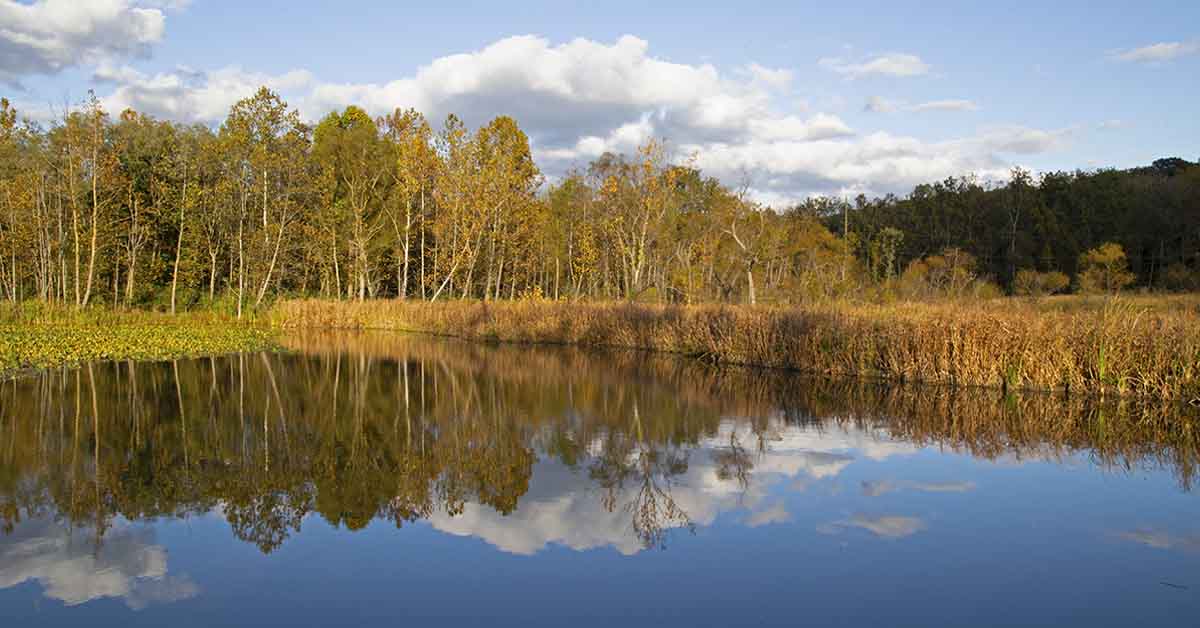
Beaver Marsh is one of the park's best wildlife destinations — and one of its best conservation stories.
The wetland sits beside the Towpath Trail and supports beavers, muskrats, turtles, frogs, fish, waterfowl, great blue herons, and many other species. A boardwalk-style observation area provides excellent views across the marsh without requiring a difficult hike.
The easiest access is from Ira Trailhead. From there, follow the Towpath Trail to the wetland.
Early morning and late afternoon are especially good times to visit, both for wildlife activity and photography. Bring binoculars and give yourself time to stand quietly. At Beaver Marsh, the longer you look, the more you tend to see.
6. Hike Among the Sandstone Cliffs at The Ledges
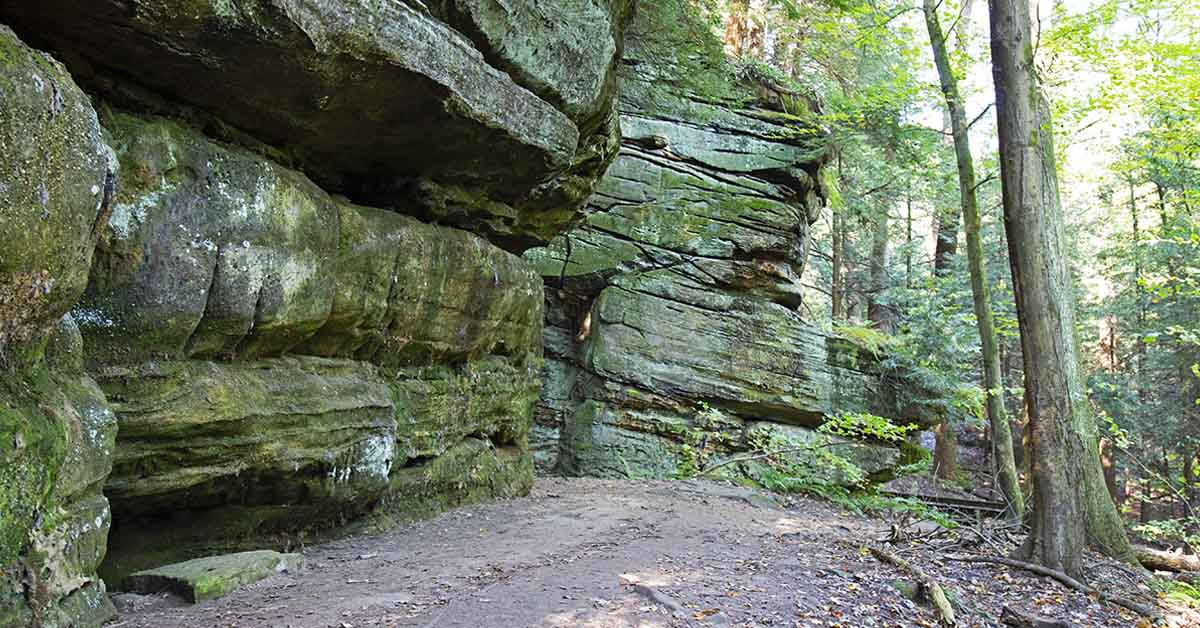
The Ledges provides one of the most distinctive landscapes in Cuyahoga Valley.
Massive blocks and walls of sandstone rise from a cool forest, creating narrow passages, moss-covered rock faces, overhangs, and a microclimate that feels completely different from the surrounding countryside.
A roughly two-mile trail loops around the formations and eventually reaches the Ledges Overlook, one of the park's best sunset locations.
The rocks themselves tell a much older story. The Sharon Conglomerate formations were created hundreds of millions of years ago and have since been shaped by weather, erosion, freeze-and-thaw cycles, and gravity.
The Civilian Conservation Corps later developed trails and recreational facilities throughout the Virginia Kendall area during the 1930s, adding another layer of history to the landscape.
Stay on the Trail: Don't climb the cliffs or venture close to unstable edges. Rocks can be slippery, particularly after rain or during winter, and Ice Box Cave remains closed to help protect bats.
7. Hike to Blue Hen Falls
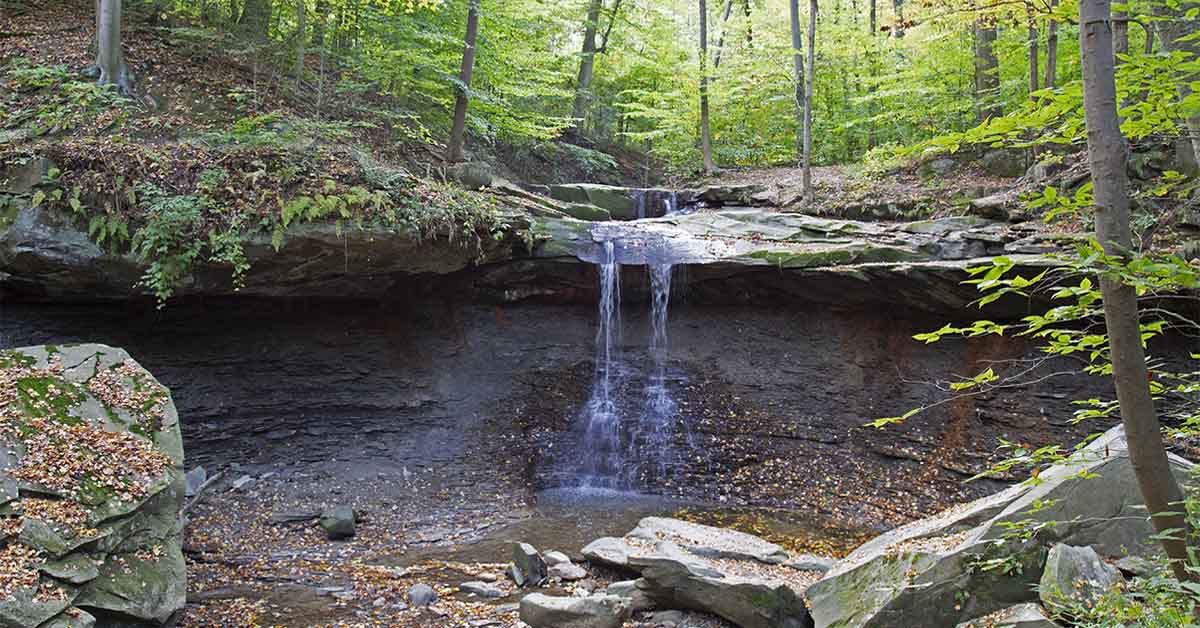
Blue Hen Falls is smaller than Brandywine, but getting there feels much more like a woodland hike.
The 15-foot waterfall lies along the Buckeye Trail in the Boston area. Older guides sometimes describe a small roadside parking lot and short walk to the falls, but that is no longer the best way to plan your visit.
Instead, hikers should begin in the Boston Mill Visitor Center area and follow the Buckeye Trail toward Blue Hen Falls.
The route is steep, rocky, and often muddy, and it includes a road crossing followed by a steep descent toward the waterfall. Wear appropriate footwear and allow more time than you would for the short boardwalk walk at Brandywine Falls.
The extra effort is part of Blue Hen's appeal. Surrounded by forest, the waterfall feels tucked away from the busier parts of the park.
8. Explore More Than 125 Miles of Hiking Trails
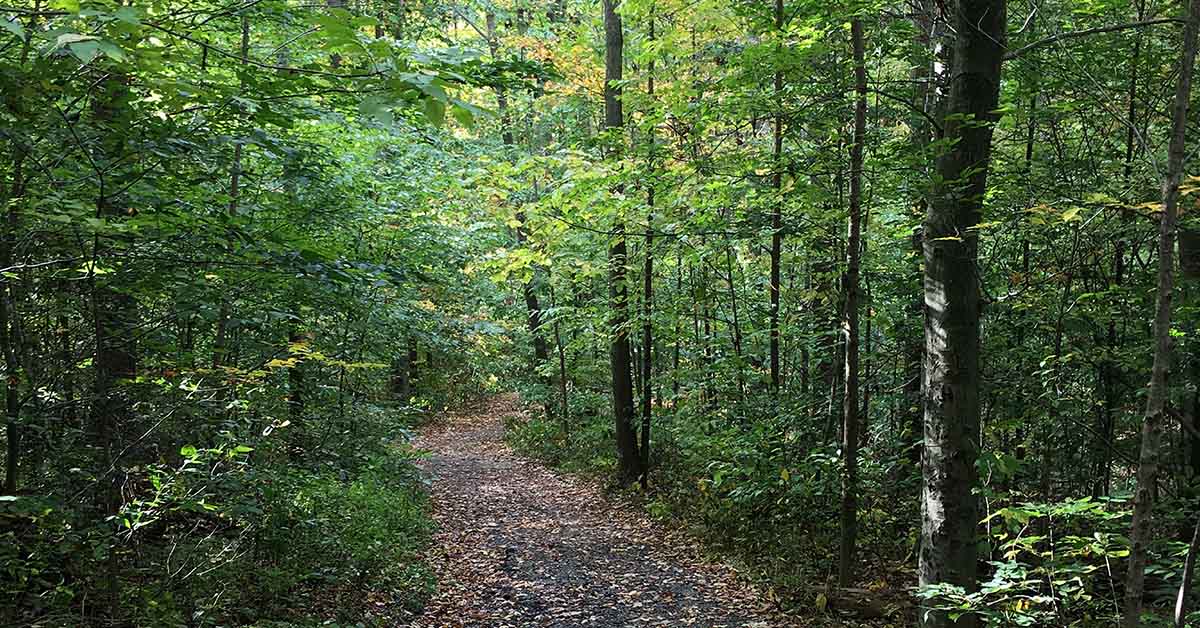
One of Cuyahoga Valley's biggest strengths is the sheer variety of its hiking.
More than 125 miles of trails cross forests, ravines, wetlands, old farm fields, streams, sandstone formations, and historic landscapes. Some routes are nearly level, while others include steep grades, rocks, mud, stepping-stone stream crossings, and log bridges.
Good Cuyahoga Valley Hikes to Consider
- The Ledges: Sandstone formations, cool forest, and a panoramic overlook.
- Brandywine Gorge: Combine the waterfall with a loop through the surrounding gorge.
- Blue Hen Falls: A more rugged woodland waterfall hike.
- Kendall Lake Area: Several interconnected trails with forest and lake scenery.
- Towpath Trail: Easy walking with canal history and numerous access points.
- Buckeye Trail: A section of Ohio's long-distance trail passes directly through the national park.
9. Mountain Bike the East Rim Trails
For cyclists who want something more challenging than the relatively level Towpath, the East Rim Trail System offers dedicated mountain biking.
The system includes several interconnected trails designed primarily for intermediate riders, with rolling terrain, technical features, stream crossings, climbs, and descents.
Trail conditions matter. East Rim may close after rain or whenever conditions could lead to damage, so always check its current open-or-closed status before heading out.
For recreational cycling, the Towpath remains the better choice for most visitors.
10. Paddle the Cuyahoga River
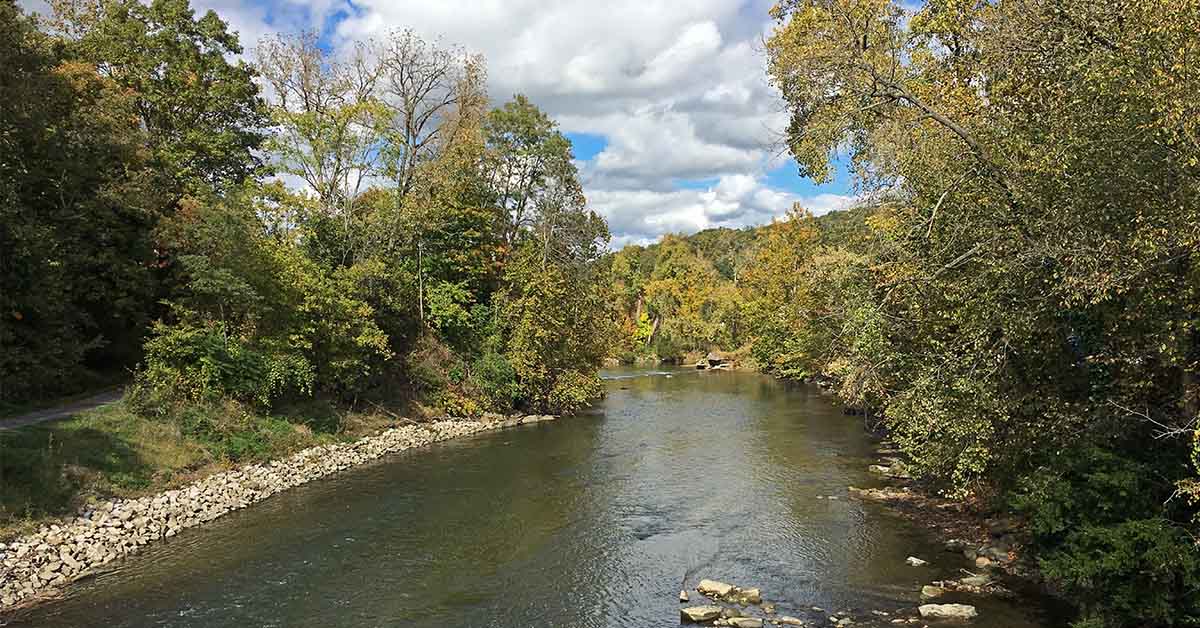
Experienced paddlers can experience the valley from the Cuyahoga River Water Trail.
It's a remarkable transformation for a river once nationally known for pollution and industrial fires. Today, the Cuyahoga supports fish, wildlife, recreation, and a growing network of paddling access.
That doesn't mean the river should be taken lightly.
Water levels, fallen trees, strainers, bridge construction, debris, low-head structures, water quality, and other hazards can change quickly. Paddlers need appropriate skills, flotation devices, their own equipment, and a current understanding of river conditions and portages.
Paddling Safety: Check current Cuyahoga River Water Trail conditions immediately before launching. This isn't a maintained amusement-park float; conditions can change after storms and some obstacles may require portaging.
11. Go Fishing
The Cuyahoga River and numerous ponds within the park offer fishing opportunities for bass, bluegill, crappie, catfish, and other species.
A valid Ohio fishing license is required for most anglers, and state fishing regulations apply within the national park. Catch-and-release fishing can help protect the park's aquatic populations and maintain recreational fishing opportunities.
Horseshoe Pond is a particularly convenient option and includes an accessible fishing pier.
12. Try Canalway Questing
For families — or anyone who enjoys turning exploration into a game — Canalway Questing is one of the park's more unusual activities.
These seasonal, self-guided adventures combine maps and rhyming clues that lead visitors through natural and historic sites around the Ohio & Erie Canalway. At the end of each quest, participants locate a hidden box, stamp their quest materials, sign the logbook, and return the box for the next visitors.
It's similar in spirit to geocaching, but there's no GPS requirement and no exchange of trinkets.
13. Experience Cuyahoga Valley in Winter
Cuyahoga Valley is truly a four-season park.
More than 125 miles of trails remain available for winter hiking, and snowy conditions open opportunities for cross-country skiing and snowshoeing. The Ledges can be particularly striking when icicles form across its sandstone walls.
Downhill skiing and snowboarding are also available at privately operated ski areas within the broader park landscape.
Winter visitors should expect icy trails, unplowed areas, changing road conditions, and much shorter daylight hours. Microspikes or other traction devices can make a major difference on icy trails.
When Is the Best Time to Visit Cuyahoga Valley?
There isn't one bad season — only very different versions of the park.
Cuyahoga Valley by Season
- Spring: Waterfalls run strongly, wildflowers emerge, wetlands come alive, and migrating birds return.
- Summer: Long days are ideal for hiking, biking, train rides, paddling, and family activities.
- Fall: Forests turn red, orange, and gold, making this one of the park's most beautiful — and busiest — seasons.
- Winter: Snow and ice transform waterfalls, ledges, forests, and trails while visitation generally becomes quieter.
If photography is a priority, I especially like early morning throughout the year. Fog can settle into the valley, wildlife tends to be more active, popular destinations are quieter, and the light filtering through the forest is often much more interesting than it is at midday.
How Much Time Do You Need at Cuyahoga Valley National Park?
Because the park is easy to reach from Cleveland and Akron, it's tempting to treat it as a quick stop. Give it a full day if you can.
One day is enough to see several signature destinations, while two or three days allow you to add a longer hike, bike ride, railroad excursion, paddling trip, or time in the historic communities surrounding the park.
A Good One-Day Cuyahoga Valley Itinerary
- Boston Mill Visitor Center: Start with maps, current conditions, and recommendations.
- Brandywine Falls: Visit early before the parking area becomes crowded.
- The Ledges: Walk among the sandstone cliffs and forest.
- Beaver Marsh: Look for wildlife from the Towpath Trail.
- Towpath Trail: Walk or bike a section through the historic canal corridor.
- Peninsula: Stop in this historic gateway community for a meal or break.
- Ledges Overlook: Finish with sunset if weather and daylight cooperate.
Planning Your Visit
Cuyahoga Valley National Park is open every day of the year, although individual facilities, railroad excursions, programs, and visitor services operate on seasonal schedules.
There is no entrance fee and no timed-entry reservation requirement.
The park also differs from many national parks because its roads remain part of the local transportation network and its boundaries contain a mixture of federal land, other public land, private property, historic communities, and partner-operated attractions.
That makes it especially important to use designated parking areas, respect private property, and check current trail and road closures before beginning your trip.
Parking Tip: Brandywine Falls, Beaver Marsh, Peninsula, and other popular trailheads can fill quickly on pleasant weekends and during fall color season. Arrive early and never park along roads or outside designated spaces.
Frequently Asked Questions About Cuyahoga Valley National Park
What is Cuyahoga Valley National Park known for?
Cuyahoga Valley National Park is best known for Brandywine Falls, the Ohio & Erie Canal Towpath Trail, the Cuyahoga Valley Scenic Railroad, Beaver Marsh, The Ledges, more than 125 miles of hiking trails, and its unusual location between Cleveland and Akron.
Is Cuyahoga Valley National Park free?
Yes. Cuyahoga Valley National Park does not charge an entrance fee or require an entrance pass. Certain partner-operated activities, railroad excursions, rentals, programs, and facilities may charge their own fees.
How far is Cuyahoga Valley National Park from Cleveland?
The park begins roughly 20 miles south of downtown Cleveland, although driving distance depends on which park destination you're visiting. Boston Mill Visitor Center sits near the center of the park between Cleveland and Akron.
How much time do you need at Cuyahoga Valley National Park?
One full day is enough to visit several major attractions such as Brandywine Falls, Beaver Marsh, The Ledges, and the Towpath Trail. Two or three days are better if you want to add substantial hiking, cycling, a scenic train ride, or paddling.
How tall is Brandywine Falls?
Brandywine Falls drops approximately 60 feet over layers of Berea Sandstone and shale. It is one of the most popular destinations in Cuyahoga Valley National Park.
Can you ride a train through Cuyahoga Valley National Park?
Yes. Cuyahoga Valley Scenic Railroad operates seasonal excursions through the national park. The railroad also offers an Explorer Program during portions of the year that can provide one-way transportation for hikers, cyclists, runners, and paddlers.
Can you bike in Cuyahoga Valley National Park?
Yes. The Ohio & Erie Canal Towpath Trail is the most popular cycling route, with about 20 miles inside the national park. Intermediate mountain bikers can also use the East Rim Trail System when conditions are open.
Where is the best place to see wildlife?
Beaver Marsh is one of the best wildlife-watching locations in the park. Visitors may see beavers, muskrats, turtles, herons, ducks, songbirds, and other wildlife. Early morning and late afternoon are generally the most productive times.
Can you kayak the Cuyahoga River?
Yes, experienced paddlers can canoe or kayak portions of the Cuyahoga River Water Trail through the national park. River conditions and hazards change, so paddlers should review current conditions, access points, portages, water quality, and safety information immediately before launching.
Can you camp inside Cuyahoga Valley National Park?
No. Cuyahoga Valley National Park currently has no National Park Service campgrounds. Campgrounds are available outside the park, and lodging is available both within and around the valley.
Are dogs allowed in Cuyahoga Valley National Park?
Pets are permitted on more than 100 miles of hiking trails and on the Towpath Trail when properly leashed. Pets are prohibited in certain locations and facilities, so check current park regulations before visiting with a dog.
What is the best time of year to visit Cuyahoga Valley?
Fall is especially popular because of the foliage, but every season has advantages. Spring brings waterfalls and wildflowers, summer is ideal for outdoor recreation and railroad trips, fall offers spectacular forest color, and winter provides snow, frozen waterfalls, and quieter trails.
A National Park Built Around a Living Valley
Cuyahoga Valley doesn't overwhelm you with one enormous landscape. Instead, it reveals itself one trail, waterfall, wetland, lock, bridge, railroad curve, and bend in the river at a time.
Stand beside Brandywine Falls. Walk where mules once pulled canal boats along the Towpath. Watch a great blue heron lift out of Beaver Marsh. Ride the train alongside the river. Wander through cool passages beneath the sandstone cliffs at The Ledges.
And think about the larger story.
This is a landscape that has been repeatedly changed by people — through farming, canals, railroads, industry, suburban development, recreation, conservation, and ecological restoration.
Today, almost 33,000 acres of that valley remain protected between two major cities.
That's what makes Cuyahoga Valley National Park remarkable. You don't have to travel to the edge of the continent to find a landscape worth exploring and protecting.
