
Best Things to Do at Sleeping Bear Dunes National Lakeshore
Robert Decker9 Best Things to Do at Sleeping Bear Dunes National Lakeshore
Sleeping Bear Dunes National Lakeshore is one of those places that completely resets your sense of scale.
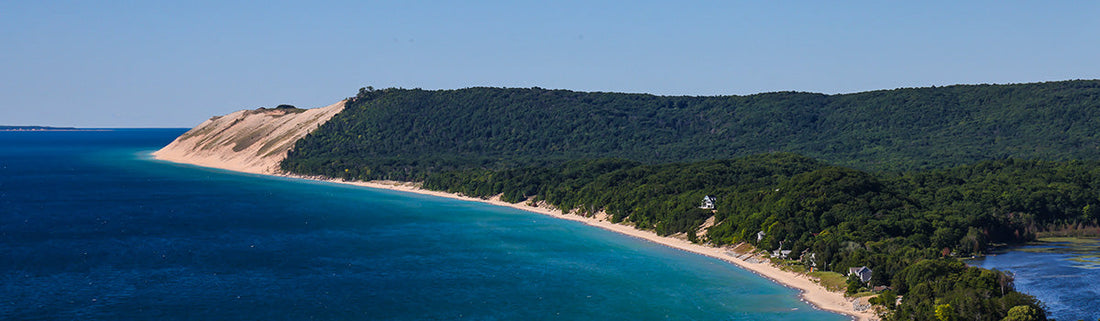
Massive dunes rise hundreds of feet above Lake Michigan. Sugar-sand beaches stretch toward the horizon. Forested trails lead to bluffs with seemingly endless views, while historic villages, farms, lighthouses, and offshore islands tell the story of generations who lived and worked along this remarkable shoreline.
Established on October 21, 1970, Sleeping Bear Dunes National Lakeshore protects more than 71,000 acres along northwest Michigan's Lower Peninsula, including North and South Manitou Islands.

One of the first things that strikes you here is Lake Michigan itself. Stand on a high dune or bluff and it feels more like an ocean than a lake. The horizon disappears into blue, waves roll onto beaches below, and enormous stretches of freshwater fill your field of view.
But the lakeshore is much more than dunes and Lake Michigan. It also protects 26 inland lakes, more than 100 miles of trails, historic farm country, maritime sites, and some of the most beautiful scenic drives in the Great Lakes region.
Sleeping Bear Dunes at a Glance
- Established: October 21, 1970
- Size: About 71,318 acres
- Lake Michigan shoreline: 65 miles total, including 35 mainland miles
- Inland lakes: 26
- Trails: About 105 miles
- Best for: Beaches, dunes, hiking, scenic drives, biking, history, photography, paddling, and sunsets
1. Start at the Philip A. Hart Visitor Center
If this is your first visit, start in the town of Empire at the Philip A. Hart Visitor Center.
You can pick up maps, check current trail and road conditions, learn about park history and geology, watch the park film, and—most importantly—talk to a ranger about how to make the most of your time.
Sleeping Bear Dunes covers a surprisingly large area, so a few minutes of planning can save a lot of driving.
Tell the ranger how much time you have and what interests you most—hiking, beaches, photography, history, biking, or simply scenic views. The lakeshore offers enough variety that your best itinerary may look completely different from someone else's.
2. Drive Pierce Stocking Scenic Drive
If you only have a few hours, make Pierce Stocking Scenic Drive a priority.
The paved, one-way road travels approximately 7.4 miles through beech-maple forest, dunes, and rolling terrain before reaching some extraordinary overlooks of Glen Lake and Lake Michigan.
There are 12 interpretive stops along the route, including the famous Lake Michigan Overlook.
Pierce Stocking Scenic Drive is generally open to vehicles from late May through late October. During the winter closure, portions of the route remain available for hiking, skiing, and other walk-in recreation.
Give yourself time. This isn't a road you want to rush.
3. Take on the Famous Dune Climb

The Dune Climb is one of Sleeping Bear Dunes' signature experiences.
The enormous wall of sand rises roughly 284 feet, and scrambling to the top is considerably harder than it looks from the parking lot.
The reward is a beautiful view toward Little Glen Lake—and the fun of running back down through the sand.
Lake Michigan is not just over the top of the Dune Climb. Reaching the lake requires continuing across several more major dunes.
Want the Full Dunes Trail?
The Dunes Trail to Lake Michigan is approximately 3.5 miles round-trip and typically takes two to four hours.
That may not sound particularly long, but hiking up and down steep dunes through loose sand makes this one of the most strenuous hikes in the lakeshore.
Carry plenty of water, sun protection, and proper footwear.
4. Hike to Empire Bluff or Pyramid Point
If you want huge views without crossing miles of exposed dunes, Sleeping Bear Dunes offers several excellent bluff trails.
Empire Bluff Trail
This popular trail leads through forest to a dramatic viewpoint overlooking Lake Michigan and the sweeping shoreline near Empire.
It's especially beautiful late in the day when the sun lowers over the lake.
Pyramid Point Trail
Pyramid Point offers another outstanding view over Lake Michigan toward the Manitou Islands.
The shortest out-and-back trip to the bluff is roughly 1.2 miles, while the full loop is approximately 2.7 miles.
The steep slopes are unstable and easily eroded. Enjoy the view from designated areas rather than descending directly down the bluff.
5. Explore Historic Glen Haven
Sleeping Bear Dunes preserves far more than scenery.
Glen Haven was once a busy Great Lakes settlement serving steamships, lumber operations, farms, and travelers.
Today, the preserved village offers a fascinating look into life along the Lake Michigan shore.
Look for:
- The Glen Haven Cannery and Boat Museum
- The restored General Store
- The historic Blacksmith Shop
- The Sleeping Bear Point Maritime Museum
- Historic buildings and remnants of the former waterfront community
The Cannery now houses a collection of historic Great Lakes boats, while the Maritime Museum occupies the former Sleeping Bear Point U.S. Life-Saving Service Station.
During the summer season, several historic buildings are staffed and open for visitors.
6. Explore Port Oneida's Historic Farm Country
One of Sleeping Bear Dunes' quieter treasures is the Port Oneida Rural Historic District.
This landscape preserves farms, barns, fields, orchards, schoolhouses, and roads that tell the story of European-American farming communities that developed here during the 19th and early 20th centuries.
It's a wonderful place to slow down, wander back roads, photograph historic buildings, and see another side of the lakeshore.
Port Oneida offers an entirely different visual experience from the dunes—weathered barns, open fields, old farmhouses, distant hills, and Lake Michigan light.
7. Paddle, Swim, Fish, or Bike

Sleeping Bear Dunes may be famous for sand, but water is everywhere.
The lakeshore contains 26 inland lakes as well as miles of Lake Michigan shoreline, giving visitors plenty of opportunities for swimming, fishing, paddling, and quiet time along the water.
Glen Lake, Bass Lake, Otter Lake, and other inland waters offer a different experience from Lake Michigan's enormous scale.
Conditions and boating regulations vary by lake, so check current park rules before launching.
Ride the Sleeping Bear Heritage Trail
If you'd rather explore on two wheels, the paved Sleeping Bear Heritage Trail currently extends about 22 miles.
The multi-use trail connects several major park destinations, including the Dune Climb, Glen Haven, D.H. Day Campground, and Glen Arbor.
It's one of the best ways to enjoy the landscape without spending the entire day in the car.
8. Discover the Manitou Islands
North and South Manitou Islands sit offshore in Lake Michigan and are among the wildest portions of Sleeping Bear Dunes National Lakeshore.
South Manitou is known for its historic lighthouse, shipwreck history, huge old-growth cedars, beaches, and trails, while North Manitou offers an even more remote wilderness experience.
Access to both North and South Manitou Islands is currently limited while the National Park Service relocates and rebuilds island docks and other infrastructure. The regular Manitou Island Transit passenger ferry is not operating during the 2026 season, and docks, villages, potable water systems, and several South Manitou facilities are closed. The NPS currently expects the island docks and villages to reopen in 2027.
If the islands are part of your future Sleeping Bear itinerary, check current NPS access information before planning your trip.
9. Stay for Sunset
Sleeping Bear Dunes faces west across Lake Michigan, which means sunset can be spectacular.
Beaches, overlooks, and dune tops provide an almost endless selection of places to watch the sun sink toward the horizon.
The Lake Michigan Overlook along Pierce Stocking Scenic Drive is one of the classic locations, but the shoreline around Glen Haven, Empire, and other beach access points can be equally memorable.
Don't leave as soon as the sun disappears. Some of the best color often arrives 10 to 20 minutes after sunset as the sky reflects pink, orange, and violet light over Lake Michigan.
What About Winter?
Sleeping Bear Dunes doesn't shut down when the snow arrives.
Winter transforms the park into a quieter landscape of snow-covered dunes, frozen forests, and empty shorelines.
Cross-country skiing and snowshoeing are popular, and portions of the Sleeping Bear Heritage Trail are groomed in winter. The closed Pierce Stocking Scenic Drive also becomes an approximately 8-mile winter ski route.
When sufficient snow is present, sledding is even permitted on designated portions of the Dune Climb.
How Much Time Do You Need?
If You Have...
- Half a day: Pierce Stocking Scenic Drive plus the Dune Climb
- One day: Add Glen Haven and a short hike such as Empire Bluff or Pyramid Point
- Two days: Explore Port Oneida, bike the Heritage Trail, and spend time on a beach or inland lake
- Three days or more: Hike deeper, paddle, explore additional shoreline, and—when island access returns—consider a Manitou Island trip
When Is the Best Time to Visit Sleeping Bear Dunes?
Season by Season
- Spring: Cooler temperatures, wildflowers, and fewer visitors
- Summer: Best for beaches, swimming, boating, biking, and the fullest range of visitor services
- Fall: Brilliant hardwood color, crisp hiking weather, and beautiful photography
- Winter: Snowshoeing, skiing, solitude, and a completely different view of the dunes
For most visitors, summer and early fall offer the widest range of activities. But fall may be the most beautiful time of all, when the hardwood forests above Lake Michigan explode with color.
Frequently Asked Questions About Sleeping Bear Dunes
Where is Sleeping Bear Dunes National Lakeshore?
Sleeping Bear Dunes is located along the eastern shore of Lake Michigan in northwest Michigan's Lower Peninsula, west of Traverse City.
How big is Sleeping Bear Dunes National Lakeshore?
The national lakeshore protects approximately 71,318 acres, including mainland shoreline and North and South Manitou Islands.
How many miles of Lake Michigan shoreline are in Sleeping Bear Dunes?
The park contains approximately 65 miles of Lake Michigan shoreline in total, including about 35 miles along the mainland.
How tall is the Dune Climb?
The famous Dune Climb rises approximately 284 feet above its base.
Can you hike from the Dune Climb to Lake Michigan?
Yes. The Dunes Trail to Lake Michigan is approximately 3.5 miles round-trip and generally takes two to four hours because of the steep, sandy terrain.
Can you swim at Sleeping Bear Dunes?
Yes. The lakeshore includes many Lake Michigan beaches and inland lakes suitable for swimming, although visitors should always pay attention to water temperature, weather, waves, and rip-current conditions.
Can you bike at Sleeping Bear Dunes?
Yes. The 22-mile Sleeping Bear Heritage Trail is a paved multi-use route connecting several popular destinations. Bikes are also permitted on maintained roads.
Are the Manitou Islands open in 2026?
Access is limited during 2026 because of major dock and infrastructure work. The regular passenger ferry is not operating, and numerous island facilities are closed. Visitors should check current National Park Service information before planning an island trip.
Bring Sleeping Bear Dunes Home
There is something wonderfully graphic about this landscape—the sweep of sand, deep blue water, green forests, and enormous horizon.
Those elements inspired my Sleeping Bear Dunes National Lakeshore Poster.

Inspired by the bold visual language of classic WPA-era park artwork, the design celebrates the towering dunes, blue water, and unmistakable Great Lakes landscape of Sleeping Bear Dunes.
Love America's National Parks?
Join 125K+ fellow National Park enthusiasts for park stories, travel inspiration, new artwork, special offers, and more.